


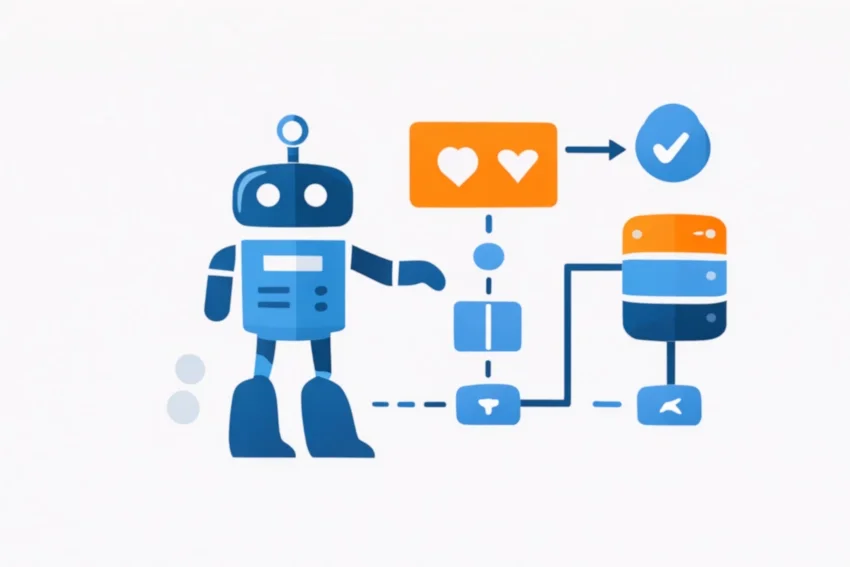
As businesses grow, operational efficiency becomes harder to maintain. Manual processes that once worked well often turn into bottlenecks, increasing costs, slowing execution, and reducing accuracy. This is why business automation has become a priority for organizations aiming to improve performance and remain competitive.
Automation is no longer limited to simple task execution. With the advancement of AI automation for business, organizations can automate complex workflows, analyze data intelligently, and make better use of resources. However, not all processes deliver equal value when automated. Some areas consistently provide higher impact, efficiency gains, and cost savings.
This article identifies the most common business processes that benefit most from automation and explains how organizations can achieve measurable improvements by targeting the right areas.
Understanding Business Automation in Practice
What Business Automation Really Means
Business automation refers to using technology to execute recurring processes and workflows with minimal human intervention. These systems follow predefined logic or intelligent decision rules to ensure tasks are completed accurately and consistently.
Automation helps organizations:
- Reduce manual effort
- Improve process consistency
- Minimize errors
- Increase operational speed
When combined with AI, automation becomes more adaptive and capable of handling complex scenarios.
Operations and Workflow Management
Automating Day-to-Day Operations
Operational workflows are among the most valuable areas for business automation. Tasks such as approvals, task assignments, notifications, and status updates can be automated to reduce delays and confusion.
Automated workflows ensure processes move smoothly between teams without manual follow-ups, improving productivity and accountability.
Process Standardization
Automation enforces standardized processes across departments. This consistency reduces variability, improves quality, and makes it easier to scale operations without adding complexity.
Customer Support and Service Processes
Inquiry and Request Handling
Customer-facing processes benefit significantly from automation. Automated systems can manage inquiries, route requests, and trigger responses instantly.
AI automation for business enhances these processes by analyzing customer intent and prioritizing requests intelligently, ensuring faster and more relevant responses.
Follow-Ups and Communication
Automation ensures consistent follow-ups and timely communication across channels. This improves customer satisfaction while reducing the manual workload on support teams.
Sales and Lead Management
Lead Capture and Qualification
Sales processes generate high volumes of repetitive tasks. Business automation streamlines lead capture, qualification, and assignment by ensuring every inquiry is processed consistently.
AI-driven automation analyzes lead data to score and prioritize opportunities, allowing sales teams to focus on high-value prospects.
Pipeline and Opportunity Management
Automated workflows track progress across the sales pipeline, trigger reminders, and update records in real time. This improves visibility and reduces the risk of missed opportunities.
Marketing and Campaign Execution
Campaign Automation
Marketing processes often involve repetitive actions such as scheduling campaigns, distributing content, and tracking engagement. Automation simplifies these tasks and ensures campaigns run smoothly.
AI automation further optimizes marketing by analyzing performance data and adjusting strategies based on audience behavior.
Data-Driven Personalization
AI-powered automation enables personalized messaging at scale. By analyzing customer data, automated systems deliver relevant content that improves engagement and conversion rates.
Expense Tracking and Reporting
Automated financial reporting provides real-time visibility into expenses and performance metrics. This supports better budgeting and cost control.
Human Resources and Employee Management
Recruitment and Onboarding
HR processes involve significant administrative work. Automation streamlines candidate screening, scheduling, and onboarding workflows, reducing time-to-hire.
AI automation supports intelligent candidate matching and improves decision-making during recruitment.
Employee Requests and Approvals
Automated HR workflows manage leave requests, approvals, and documentation, improving efficiency and employee experience.
Data Management and Reporting
Data Collection and Processing
Manual data handling is time-consuming and error-prone. Business automation standardizes data collection and processing, ensuring accuracy and consistency.
AI-driven systems identify anomalies and validate data automatically.
Analytics and Performance Reporting
Automated reporting provides decision-makers with real-time insights into operations, performance, and trends. This improves visibility and supports data-driven decision-making.
Supply Chain and Inventory Management
Demand Forecasting and Planning
Supply chain processes benefit greatly from AI automation. Predictive models analyze historical and real-time data to forecast demand and optimize inventory levels.
This reduces waste, prevents shortages, and improves operational efficiency.
Order Processing and Fulfillment
Automation streamlines order processing, tracking, and fulfillment workflows, ensuring timely and accurate execution.
Compliance and Documentation
Policy Enforcement and Audit Trails
Compliance-related processes require consistency and transparency. Automation enforces rules, tracks actions, and maintains audit trails automatically.
This reduces risk and improves governance.
Document Management
Automated document handling ensures proper storage, retrieval, and version control, improving efficiency and compliance.
Why AI Automation for Business Maximizes Impact
Traditional automation delivers efficiency, but AI automation enhances impact by:
- Adapting to changing conditions
- Learning from data
- Supporting predictive insights
- Improving outcomes over time
AI automation enables businesses to move from static processes to intelligent operations.
Prioritizing Automation for Maximum ROI
Organizations achieve the highest return on investment by focusing automation on:
- High-volume, repetitive processes
- Error-prone tasks
- Time-sensitive workflows
- Data-intensive operations
Targeting these areas delivers immediate efficiency gains and long-term scalability.
Conclusion
Business automation delivers the greatest value when applied to the right processes. Operations, customer service, sales, finance, HR, data management, and compliance are among the areas that benefit most from automation. By combining business automation with AI automation for business, organizations achieve higher efficiency, reduced costs, improved accuracy, and better use of resources. Automation is no longer just a tool for efficiency—it is a strategic capability that supports scalable growth and long-term competitiveness. For organizations seeking sustainable success, automating high-impact processes is a critical step toward smarter, more resilient operations.
